

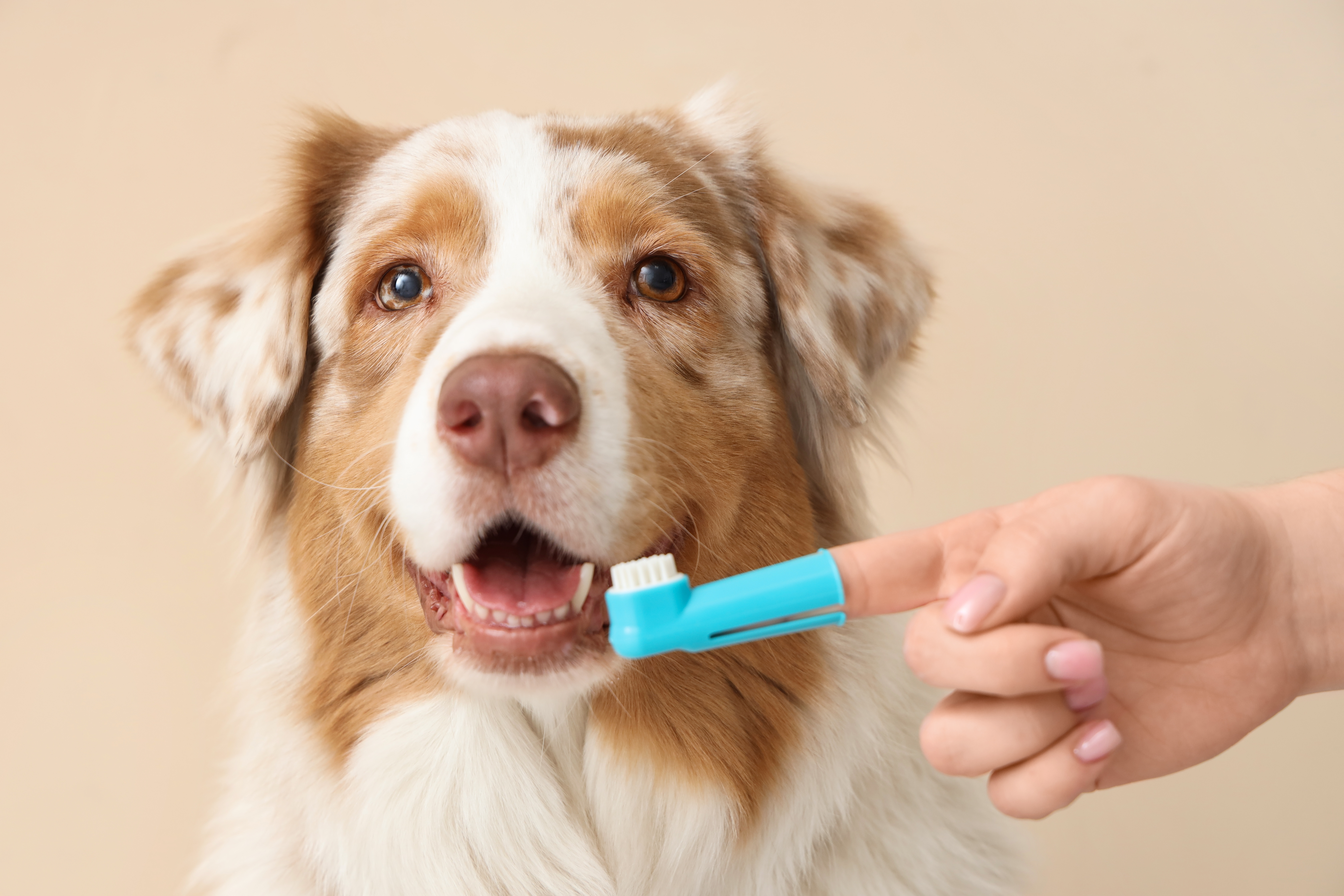
A professional dental cleaning does much more than freshen your dog’s breath. Plaque and tartar can build up above and below the gumline, contributing to gingivitis, periodontal disease, painful teeth, and eventual tooth loss. At Madison Animal Care Hospital in Madison, AL, we provide comprehensive pet dental care that includes oral examinations, digital dental X-rays, scaling, polishing, and extractions when necessary.
Step 1: We Evaluate Your Dog Before Anesthesia
Before beginning a dental procedure, we examine your dog to make sure they are healthy enough to undergo anesthesia. Your dog’s age, medical history, current health, and other individual factors help guide the anesthetic plan.
Professional veterinary dental cleanings require general anesthesia because it allows the veterinary team to safely examine and clean areas beneath the gumline. It also keeps your dog still and comfortable while detailed dental work and X-rays are performed.
Step 2: Your Dog Is Carefully Monitored
After anesthesia is administered, our veterinary team continually monitors your dog’s vital signs throughout the dental procedure. At Madison Animal Care Hospital, patient monitoring is an important part of dental care from the beginning of anesthesia through the procedure.
Anesthesia allows us to perform a thorough oral examination without causing your dog unnecessary stress. It also helps protect the airway while water and dental debris are present during cleaning.
Step 3: Digital Dental X-Rays Show What We Cannot See
A large portion of each tooth sits below the gumline, where problems may not be visible during a basic examination. Madison Animal Care Hospital believes dental X-rays should be part of every pet dental visit because they can reveal disease affecting tooth roots and surrounding structures.
Dental radiographs may help identify issues such as:
Disease beneath apparently normal-looking teeth
Bone loss around tooth roots
Problems that may require extraction or additional treatment
Hidden damage that cannot be identified by looking at the crown alone
Areas that need closer examination during the procedure
AAHA also recommends intraoral dental radiographs as an important part of comprehensive veterinary dental evaluation.
Step 4: We Remove Plaque and Tartar Above and Below the Gumline
Once we can fully evaluate the mouth, the teeth are professionally scaled. Scaling removes plaque and hardened tartar from visible tooth surfaces as well as beneath the gumline, where periodontal disease develops.
This is an important difference between a professional veterinary dental cleaning and an anesthesia-free cosmetic cleaning. Cleaning only visible surfaces cannot adequately evaluate or treat disease beneath the gums.
After scaling, the teeth are polished to smooth the surfaces and complete the cleaning process. Madison Animal Care Hospital includes both scaling and polishing among its pet dental services.
Step 5: We Address Dental Problems Found During the Procedure
Sometimes dental X-rays and a complete anesthetized examination reveal problems that were not obvious beforehand. A badly damaged, infected, or unstable tooth may require extraction. Madison Animal Care Hospital performs dental extractions and can also coordinate referrals for advanced procedures such as root canals, restorations, oral surgery, or interceptive orthodontics when appropriate.
The specific treatment your dog needs depends on what we find during the examination and X-rays.
Step 6: Continue Dental Care at Home
Professional cleanings are only part of maintaining your dog’s oral health. Regular home dental care helps reduce plaque accumulation between veterinary visits. Madison Animal Care Hospital recommends routine tooth brushing and Veterinary Oral Health Council-approved dental products as part of an ongoing oral hygiene plan.
If your dog has persistent bad breath, visible tartar, red gums, difficulty eating, or is due for a professional dental evaluation, schedule an appointment with Madison Animal Care Hospital at 4044 South Sullivan St., Madison, AL 35758, or call 256-461-7575 to help protect your dog’s teeth, gums, and long-term oral health.


